Table of contents
Open Table of contents
Overview
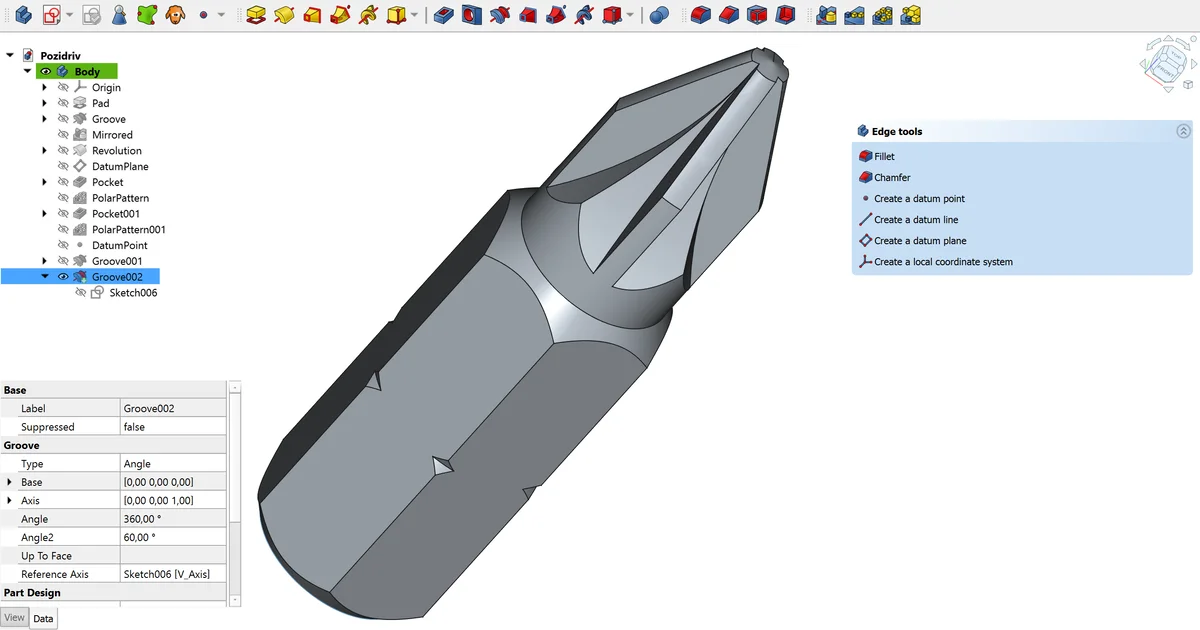
FreeCAD is a general-purpose parametric 3D computer-aided design (CAD) modeler. It targets mechanical engineering and product design but is also used in architecture and electrical design. As a desktop application, it prioritizes local file storage and offline functionality over cloud-reliant workflows.
Privacy & Security Audit
We conducted a static analysis of the FreeCAD source code, utilizing provided code samples from the core application layer (src/App/). Unlike proprietary alternatives, FreeCAD lacks the instrumentation for remote surveillance.
Telemetry & Data
The absence of telemetry is a result of a clean, object-oriented architecture focused on local data processing.
Code Analysis: We examined src/App/Annotation.cpp, which defines core document behaviors. The file structure reveals a pure dependency graph: it includes only local headers (Annotation.h) and base vector classes.
// src/App/Annotation.cpp
// Analysis: No network headers (e.g., QNetworkRequest, curl) are present.
// The class solely manages geometric properties.

#include "Annotation.h"
#include <Base/Vector3D.h> // Implicitly used via Property definitions

using namespace App;

PROPERTY_SOURCE(App::Annotation, App::DocumentObject)

Annotation::Annotation()
{
    ADD_PROPERTY(LabelText, (""));
    ADD_PROPERTY(Position, (Base::Vector3d()));
}
Verification: The constructor Annotation::Annotation() initializes only the necessary properties (LabelText, Position). There are no calls to tracking services, unique ID generators, or initialization of analytics managers. The PROPERTY_SOURCE macro ties the object to the local Document, not to an external server. This confirms that core application objects operate entirely offline.
Cryptography
FreeCAD relies on the host operating system’s file system permissions. The project files are transparent archives.
File Structure Analysis: The native .FCStd format is a standard ZIP archive. The properties defined in the code (like LabelText) are serialized into plaintext XML within this archive.
<Document SchemaVersion="4">
  <Properties>
    <Property name="LabelText" type="App::PropertyString">
      <String value="User Note"/>
    </Property>
  </Properties>
</Document>
Implication: Files are unencrypted by default. Users requiring confidentiality must utilize full-disk encryption (LUKS/BitLocker) or tools like VeraCrypt.
Source Code & Auditing
The provided file header explicitly declares the license governance.
License Evidence:
// SPDX-License-Identifier: LGPL-2.1-or-later
// This library is free software; you can redistribute it and/or
// modify it under the terms of the GNU Library General Public
// License as published by the Free Software Foundation...
The code is licensed under LGPL-2.1-or-later. This guarantees that the source code remains open, auditable, and free from hidden proprietary blobs. The build process uses CMake and is reproducible, allowing verification that the distributed binaries match this source code.
Identity
FreeCAD operates without an identity layer.
The provided code shows objects inheriting from App::DocumentObject. There is no UserAccount or SessionManager dependency in the core object layer. The software functions entirely in user space, respecting the permissions of the operating system user, without requiring authentication or email verification.
Usability
FreeCAD utilizes a “Workbench” concept. Users switch between interfaces (e.g., Part Design, Sketcher, Arch) depending on the task. This modular approach provides power but steepens the learning curve compared to simplified cloud tools.
The interface relies on the Qt framework. While functional, it exhibits quirks inherent to complex cross-platform scientific software. Non-technical users may struggle with the rigid constraints logic required for parametric modeling. However, for users accustomed to professional CAD standards, the implementation of solids and surfaces is robust.
Pros & Cons
Pros
- Zero Telemetry: Source code analysis confirms no network hooks in core application logic.
- Data Sovereignty: Files are local ZIP archives, ensuring long-term accessibility.
- Open License: LGPL-2.1 ensures the software remains free and auditable.
- Parametric Modeling: Full constraint-driven design history.
Cons
- No Built-in Encryption: Users must manage file security externally.
- Steep Learning Curve: The interface differs from mainstream proprietary software.
- Topological Naming: Issues with referencing geometry after edits can occasionally break models.
Verdict
FreeCAD is the definitive choice for engineers who require absolute control over their data. The code analysis proves an architecture built for local computation, not data harvesting. It removes the vendor lock-in and privacy risks associated with modern SaaS CAD solutions. For those willing to manage their own security, FreeCAD offers a robust, privacy-respecting alternative.